
Days 5-10: From Code to Product (Testing, Landing Page, and the Cat Theme)
The first week was infrastructure. This week was about transforming a monorepo into something that looks and feels like a real product.
Days 5-8: The Testing Sprint — 147 Commits
Set up Vitest across the monorepo. My testing priority order was deliberate:
1. Shared packages first — the API streaming helper, Supabase client, credit management. These are load-bearing walls. If createAIStreamResponse() has a bug, all 15 streaming routes break. If credit deduction races, users get free readings or double-charged. 36 tests for the streaming helper alone, covering every code path: successful stream completion, mid-stream errors with credit refund, content filter truncation, SSE event formatting.
2. Domain calculation logic — BaZi calculations, tarot card draws, Liuren divination rolls. I can't personally verify correctness (zero domain knowledge), but I can verify deterministic behavior: same birth data always produces same chart, same deck shuffle always produces expected distribution, same hexagram always maps to same meaning.
3. API route integration tests — mock auth tokens, verify credit deduction, confirm SSE event format matches frontend expectations.
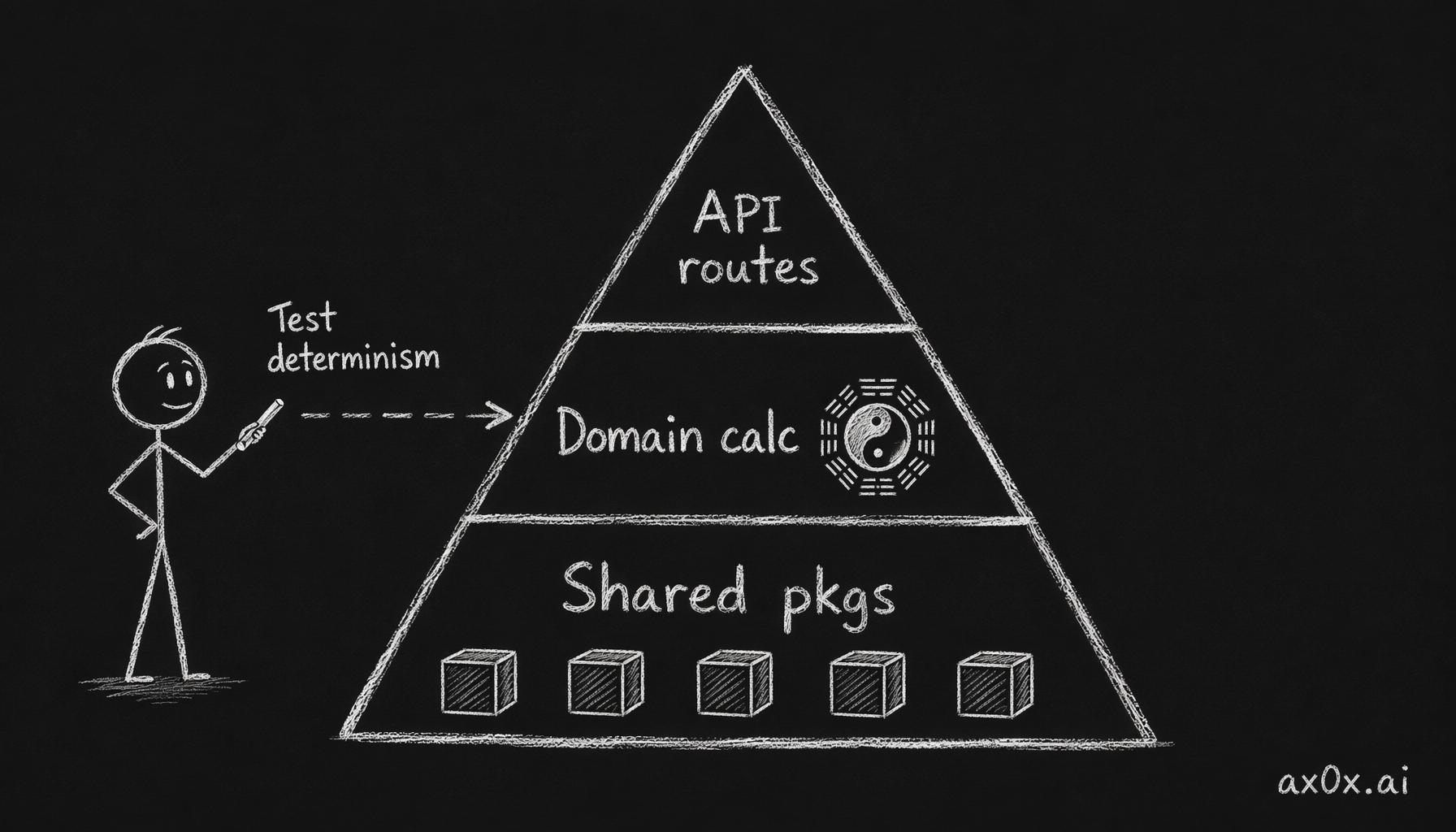 A deliberate three-layer testing priority — shared packages up to domain calc up to API routes — where domain logic is tested for determinism, not correctness
GitHub Actions CI pipeline: lint → type-check → build → test. Every PR gets the full treatment. This sounds standard, but for a solo developer it's the difference between "I think this works" and "I know this works."
147 commits across 4 days. Not glamorous. By the end I had confidence the platform wouldn't explode when I started making changes faster.
Days 9-10: Branding and Monetization — 100 Commits
The Cat Theme
PanPanMao (盼盼猫). The calculating cat. The fortune-telling cat.
Once the cat theme clicked, everything cascaded. Each app got a cat-themed treatment. The credit currency became dried fish treats (小鱼干). Because what else would you pay a fortune-telling cat with?
The brand decision was a product decision, not a marketing decision. Fortune-telling can feel intimidating or scammy. The cat makes it approachable. Users share results because they're fun, not because they're "accurate." This distinction matters for virality.
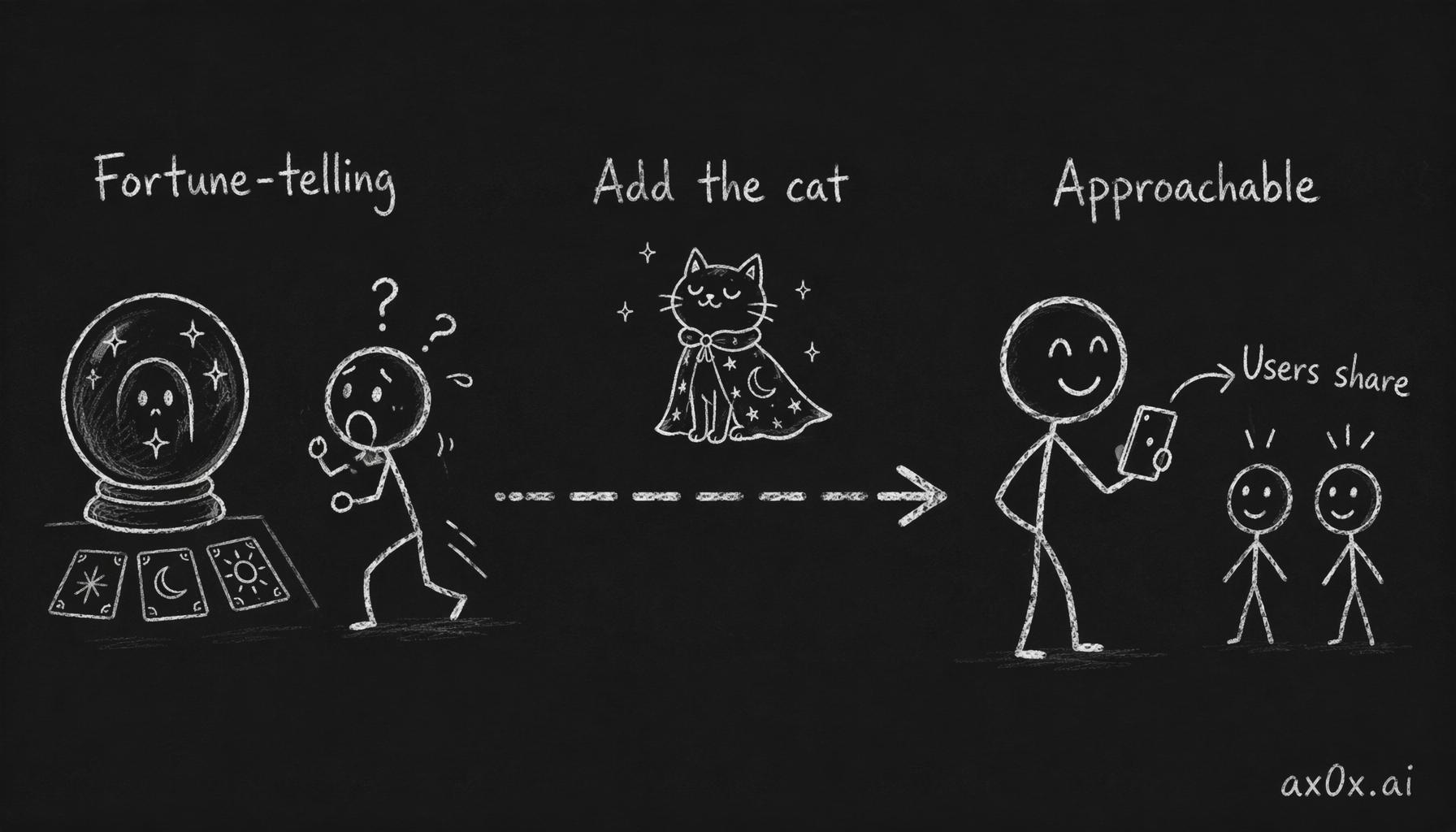 Brand is a product decision — wrapping the intimidating, scammy-feeling act of fortune-telling in a cat makes it approachable, so users actually share it
Stripe Integration
Four credit packages with the classic pricing psychology:
-
10 credits / $6.99 (entry tier)
-
50 credits / $24.99 (volume discount)
-
150 credits / $59.99 — Most Popular badge (anchor tier)
-
500 credits / $149.99 (power user)
The "Most Popular" badge isn't just a label — it's a pricing anchor. When I later tested removing it, conversion on that tier dropped noticeably. Bundle psychology is real.
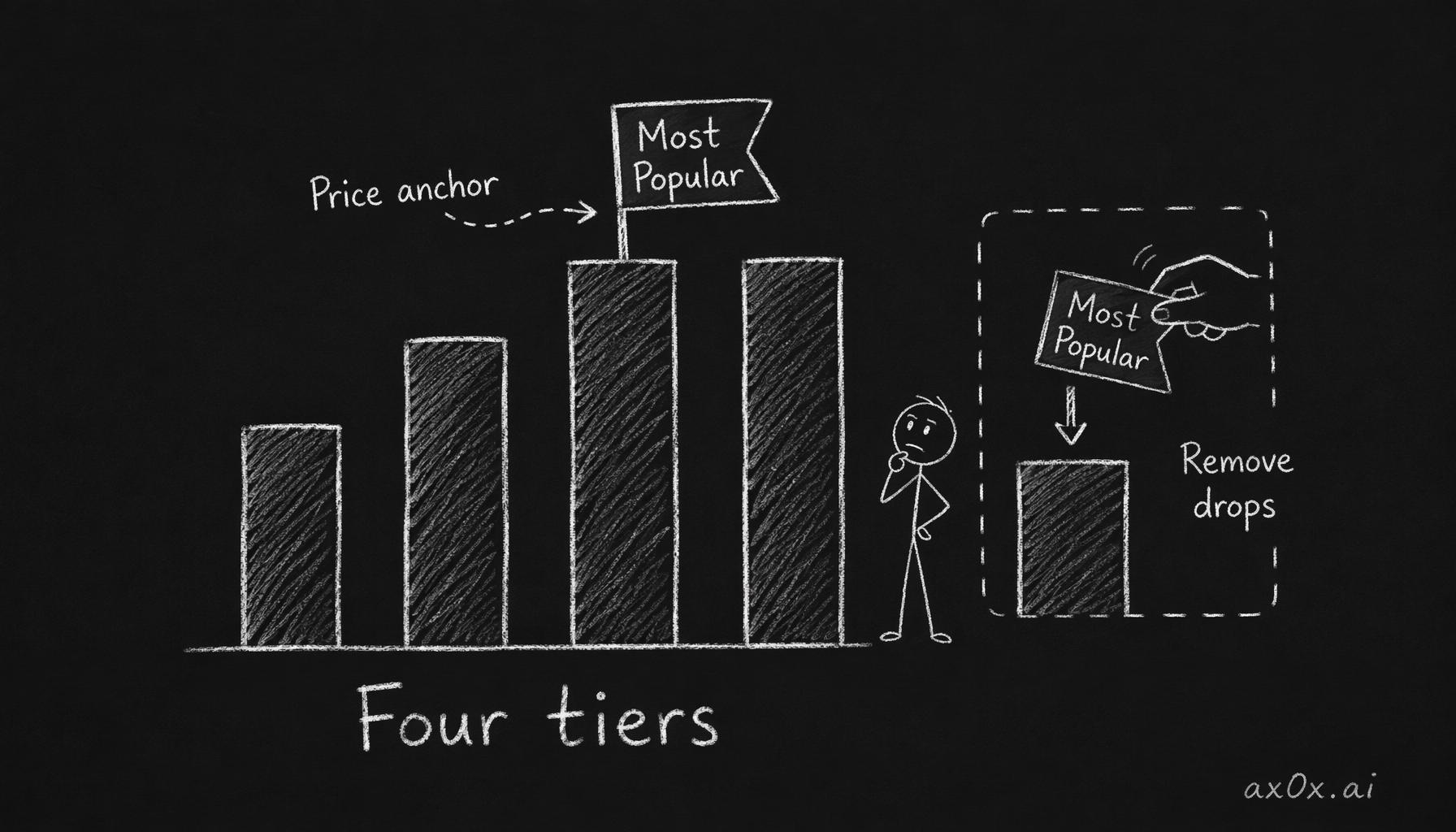 Across four credit tiers, the middle one wears a Most Popular badge that acts as a price anchor — remove it and that tier's conversion drops
I priced credits so each reading costs a fraction of the credit package price. The credit abstraction matters: people are more willing to spend 5 fish treats than a dollar amount. The currency rename from "credits" to "小鱼干" reduced perceived spending friction.
The Landing Page v1
Warm brown and gold tones. Mobile-first. "Thousand-year wisdom x Modern AI" tagline. Claude helped with Chinese copywriting — the tagline came from a brainstorming session where I evaluated 20 options.
This landing page would later be completely redesigned to dark luxury (Days 12-19) because "cozy" undermined the gravity users expected from a fortune-telling platform.
What I Learned This Week
Testing is an investment, not a cost. It paid for itself immediately during the branding refactors. Changing themes, renaming credit currencies, updating UI copy across 6 apps — the test suite caught three regression bugs I would have shipped.
Brand is a product decision. The cat theme made the platform approachable in a domain that can feel intimidating. It changed how users interacted with the product.
Pricing is psychology, not math. I spent more time on credit package naming than on the payment flow code.
AI for domain branding works. Claude generated Chinese copywriting I couldn't have written myself. The bilingual (zh-CN/zh-TW/en) i18n support across the entire platform was AI-translated and human-reviewed.