
At 3:47 AM, Someone Was Using Your Phone
Three things this article is about:
One, Shadow Access inverts the found-phone genre. In every other game like this, you investigate someone else's device. Here, you investigate your own — and the horror is personal.
Two, the UI is the narrative. The game starts as a clean iOS interface that gradually gets "infected" with green traces of the intruder's presence. No exposition needed — the interface tells the story.
Three, this is the most conceptually original of the three games. Inside Job plays with moral gray areas. Dead Signal plays with data puzzles. Shadow Access plays with psychological fear — someone knows everything about you.
Your Own Phone, But Something Is Wrong
The first two games have you searching other people's devices. Inside Job: a corporate desktop. Dead Signal: a murder victim's phone.
Shadow Access is different. You wake up one morning. Your phone is on the nightstand, charging normally. You unlock it, scroll casually, and something feels off.
You open the photo gallery. The most recent photo isn't one you took.
3:47 AM. Your apartment. Shot from the living room. The bedroom door is visible in the frame. You were asleep.
You don't remember taking this photo.
The game starts from this moment.
Finding What Doesn't Belong
Instead of searching for clues, you're searching for anomalies — things that aren't yours.
Screen Time shows 2.5 hours of activity between 2 AM and 5 AM. You were sleeping.
In Mail, a forwarding rule has been set: all emails containing "bank" or "password" are auto-forwarded to an address you don't recognize.
In Messages, you apparently texted three friends: "I'm fine, just busy lately." You didn't send those.
In Settings, there's a new app called "System Tools." Its icon looks like a native iOS utility. Open it: disguised spyware.
Here's the fundamental difference: when you search someone else's phone, you're a detective. When you search your own phone, you're a victim.
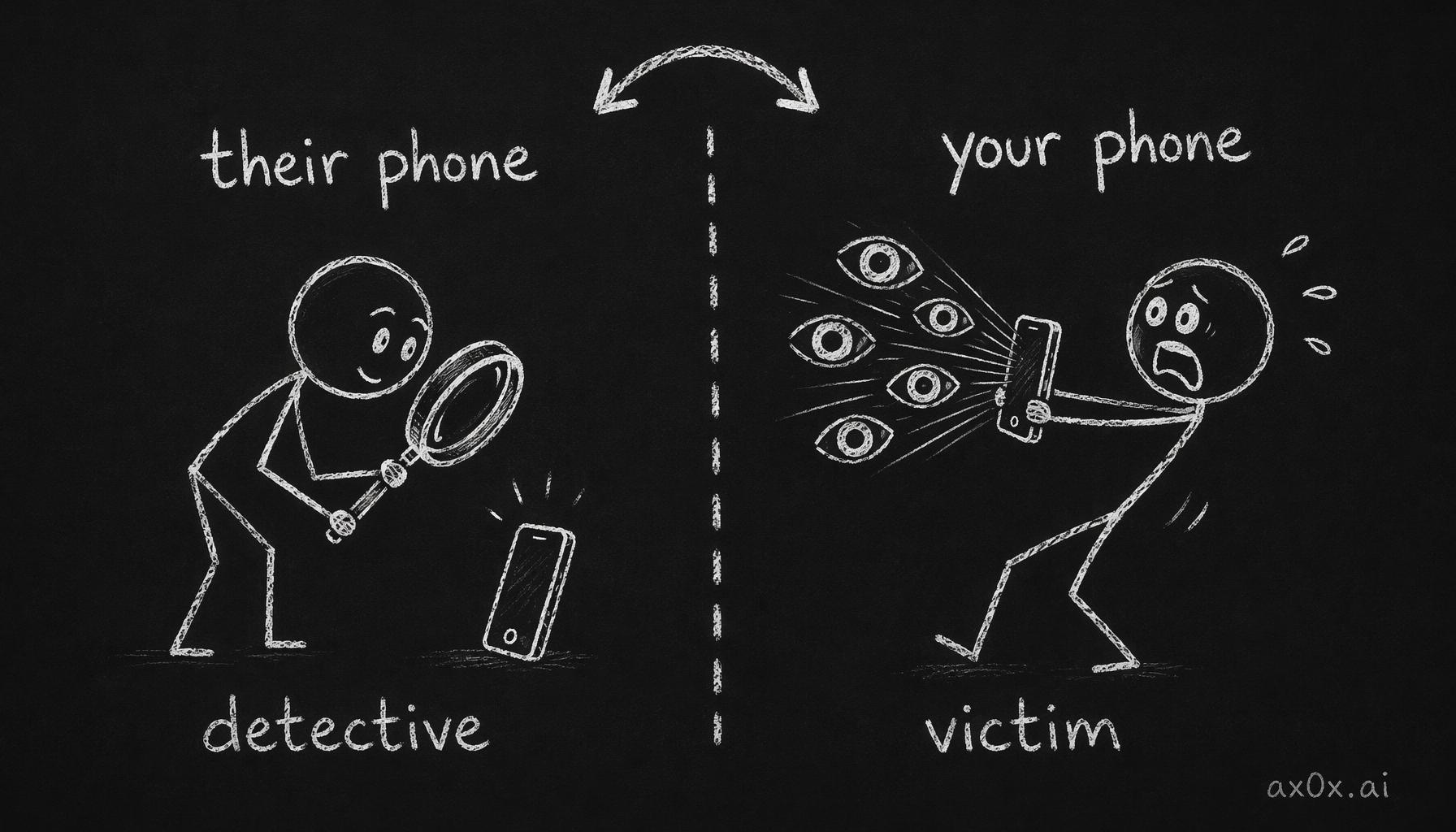 Searching someone else's phone makes you a detective; searching your own makes you the victim — same action, inverted emotion.
Completely different experience.
The UI Tells the Story
Traditional found-phone games create fear through discovering others' secrets. Shadow Access creates fear through discovering that someone has already seen all of yours. And this person is physically close — because that 3:47 AM photo was taken inside your home.
The visual design reinforces this progression. The game starts as a standard iOS white interface — clean, normal, exactly the phone you use every day. As you uncover more anomalies, the interface gets "infected." The intruder's traces appear in dark green, like night-vision coloring. Occasional app crashes and screen flickers. Your familiar daily tool slowly becomes something you don't recognize.
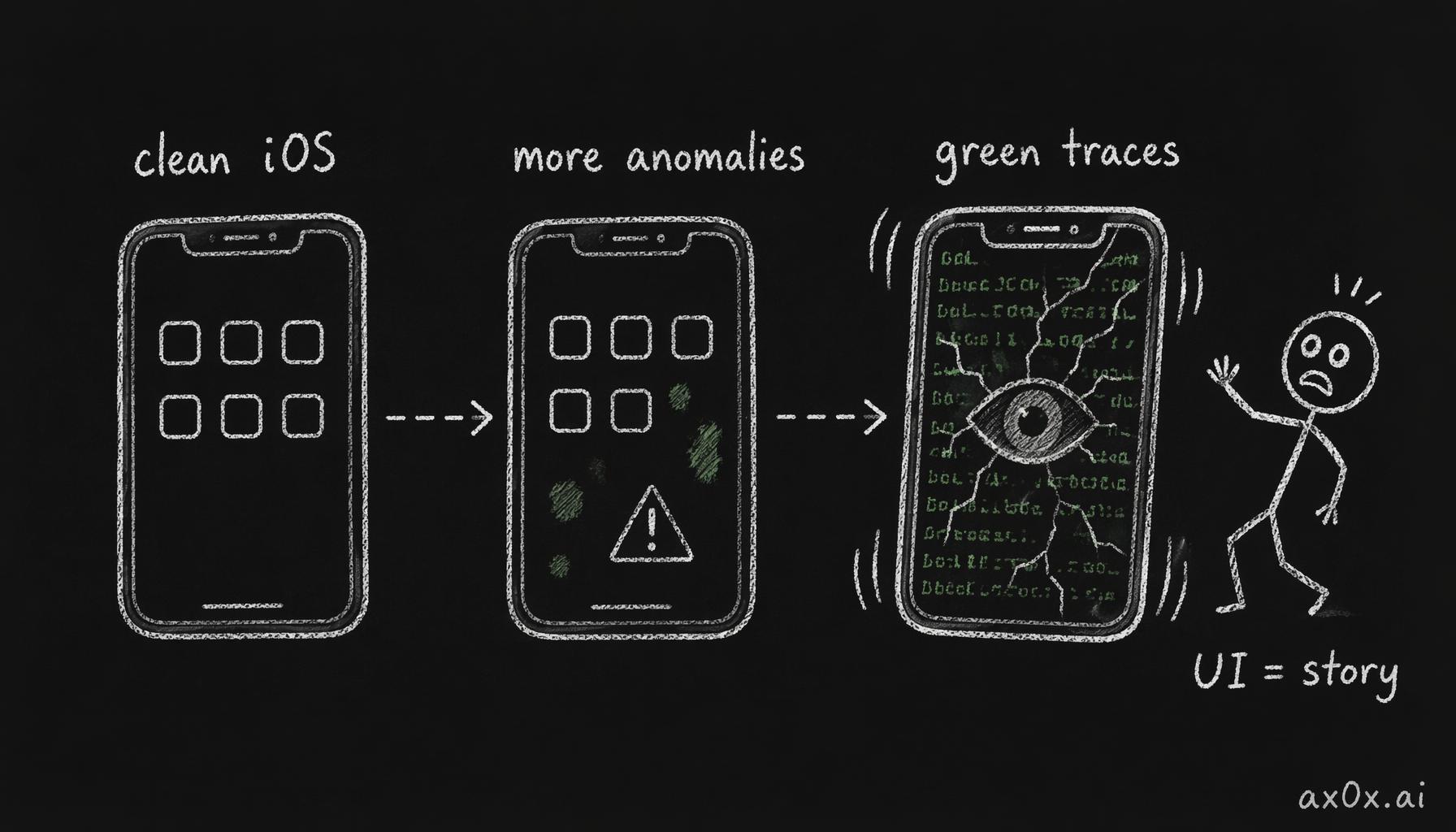 The phone interface goes from clean iOS to dark-green infection step by step — the UI change itself is the narrative, no text needed.
This transformation is the narrative. No text tells the player "your phone has been compromised." The interface tells that story for you.
Three Games, Three Fears
Of the three games, Shadow Access has the most unique concept:
- Inside Job — the fear of moral compromise. You find the truth, but the truth implicates you.
- Dead Signal — the fear of patterns in data. Someone trusted by everyone is a killer.
- Shadow Access — the fear of exposure. Someone knows everything about you: your photos, your chats, your location, your sleep schedule.
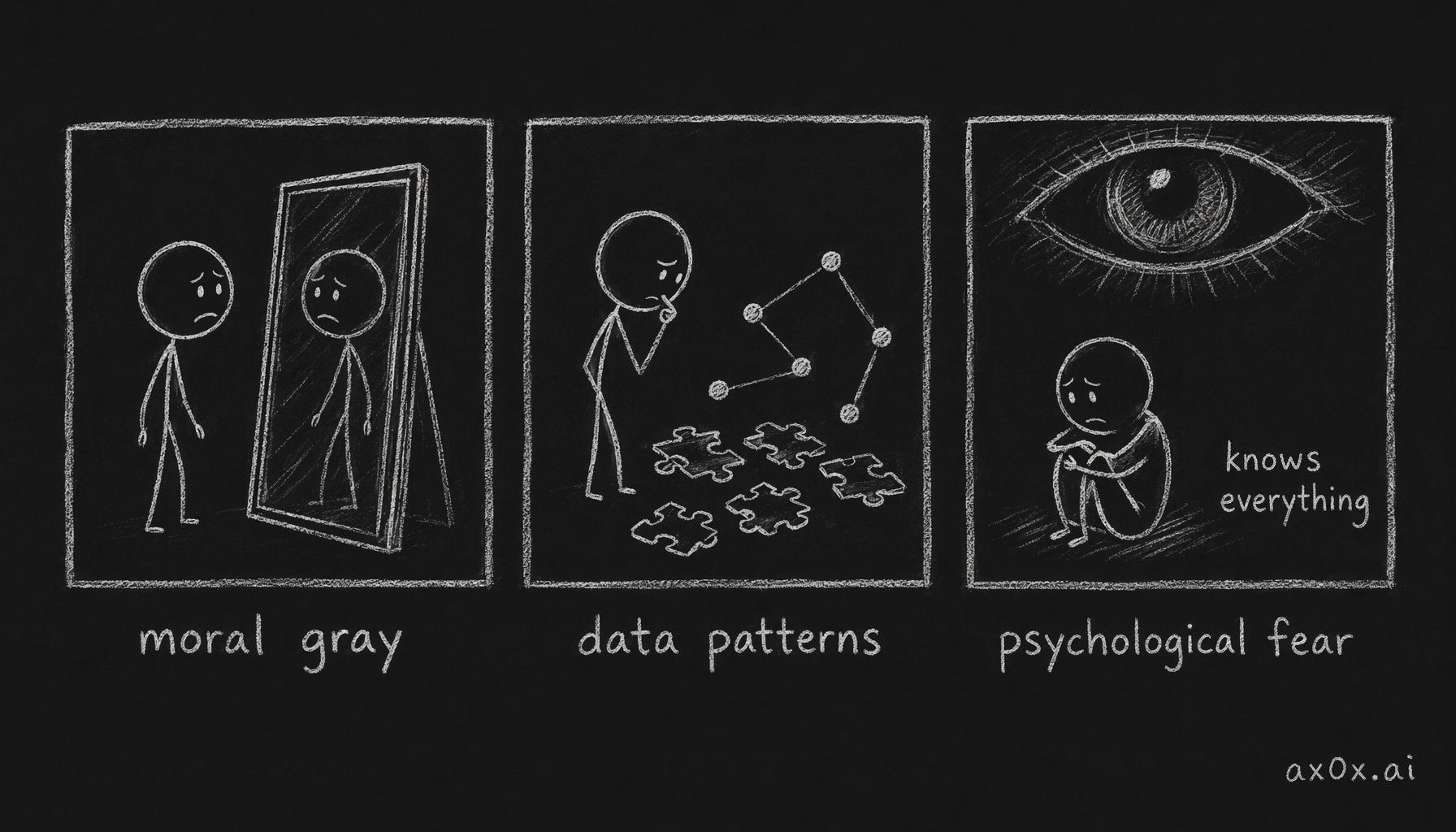 Three games, three fears: moral gray areas, patterns in data, and the psychological fear that someone knows everything about you.
For the final reveal — who the intruder is — I want to let Claude Code design the twist. Inside Job's experience taught me that CC is better at narrative design than I am. I set the direction; it delivers the surprise.
Three games. Three completely different fears. A corporate mirror, a dead person's signal, a betrayal from your most private device.
Now we build.